
Mr. Parts: What a Wrong Delivery Taught Us About Designing for People Who Cannot Wait
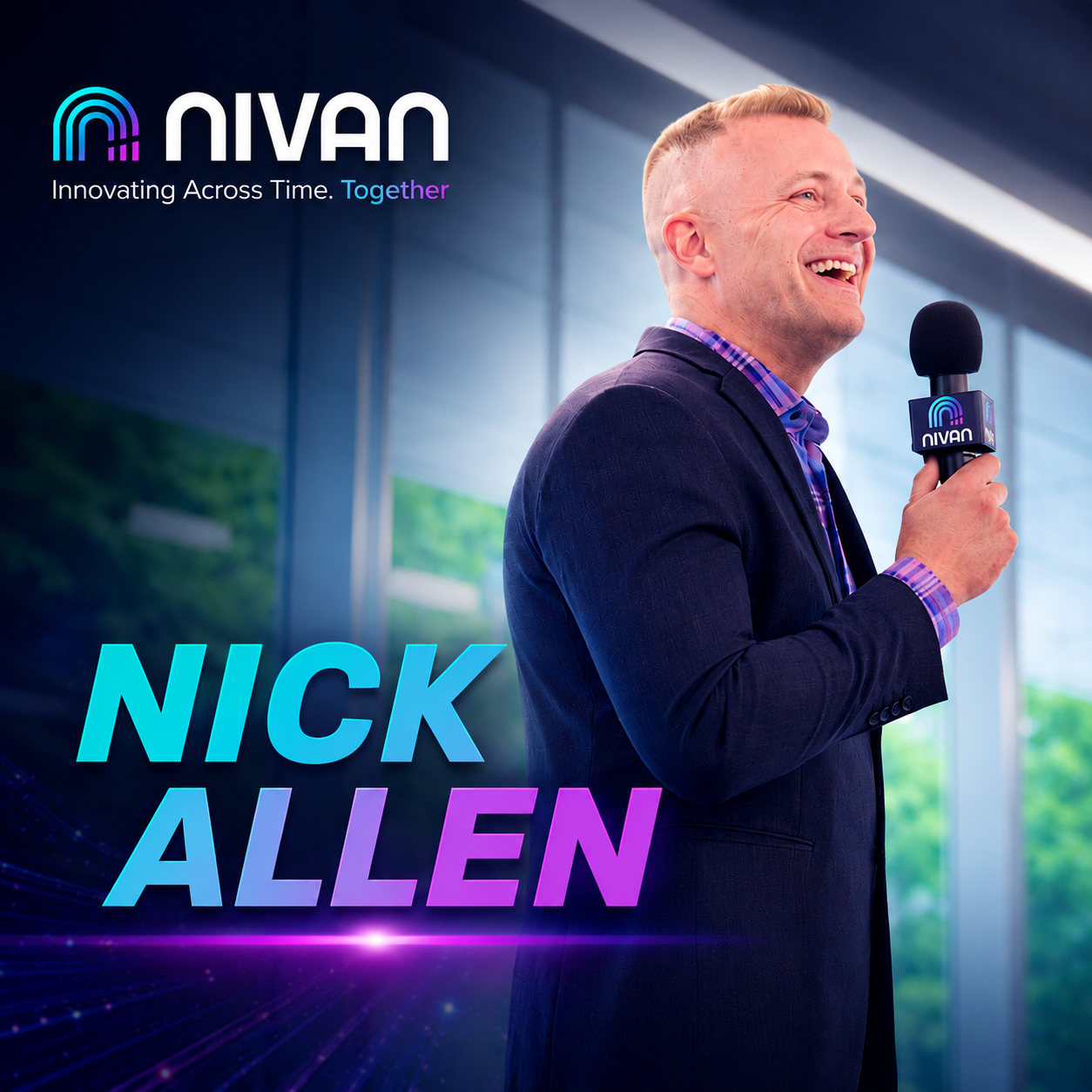
Nick Allen opened the past portal at Nivan Live 2026 with a career told through machines, from a library book of text only games to a liquid cooled server to a hospital hallway where a field engineer opened a box and knew instantly it held the wrong part. His session was not a technology talk. It was an argument that proximity to the problem is the only durable advantage a practitioner has, and that the people closest to the pain already know the answer if anyone bothers to ask them.
The hallway where the research stopped being research
Nick went to shadow a field engineer repairing a CT machine, expecting a routine observation session. What he found was a trauma scanner out of service, a nurse asking every five minutes when it would be back, and a delivery driver walking out of a truck with a box the engineer recognised as wrong before it was even opened. Then came the phone call home about a recital that would be missed. That call is where a shadowing study turned into a decade of work.
The problem nobody wanted to own
GE shipped replacement parts for imaging equipment with descriptions so poor that searching for the word tube would not surface a CT tube. There were no photographs, no weights, no dimensions. Six thousand field engineers were ordering blind and returning the majority of what arrived. The internal proposal was five years and ten million dollars to photograph and rewrite millions of records. The business gave the team five weeks.
Thirty thousand parts, not millions
The reframe came from the users. One engineer described how car parts work: give the shop a vehicle identification number and you see only the parts that vehicle actually needs. Nick asked how many distinct parts GE genuinely shipped in a year. The order history, data nobody had ever considered valuable, said thirty thousand. The problem shrank from unsolvable to buildable in a single query.
Letting the users finish the product
The mobile app launched incomplete on purpose. Engineers entered a serial number and saw the parts most likely needed for that machine. The photographs were missing, so the app asked engineers to take one while they worked. The descriptions were unusable, so it asked them to add a keyword. Within weeks the images arrived. Within months the vocabulary did. The product was completed by the people using it rather than by a procurement programme.
Bookends are not the problem
At Fidelity, Nick was hired to improve health plan enrolment and bill payment. Research showed that both of those were bookends and the pain sat in the middle: not knowing which plan to choose, not knowing how much to set aside, not understanding a statement that announces it is not a bill, and having no money when the real bill arrives. The team spent a year convincing the business to bring medical bills in house so the whole span could be designed rather than only its two ends.
Data that nobody thought was useful
Once bills for twenty five million households were visible, the questions changed. The system could recommend a plan based on what people of a similar age, family size and postcode had used successfully. It could suggest a savings figure with a stated confidence. Partners closed the remaining gaps, from booking appointments that were confirmed in network to eighteen month interest free plans for the roughly eighty percent of people who cannot pay a medical bill outright.
The call that reframed everything
In January of last year the phone rang and the message was that it was his final day. Nick was candid about how much that still hurts, and about the question it forced. Was he Nick because of GE or Fidelity, or was he Nick anywhere he went. His answer was to return to the conviction underneath the work, that nothing is impossible and that the worst part of a person's day can be redesigned into the best.
Buying the company he could not convince anyone to buy
Ten years earlier he had asked GE to partner with a firm holding equipment data across forty percent of American hospitals. The answer then was no. Unemployed and restless, he called the owner directly and asked to buy it. Thirty minutes later he had a price, and then he assembled funding and a team, several of whom had also just lost jobs. The work now is turning forty years of disconnected hospital data into replacement decisions worth hundreds of millions.
The question hospitals actually asked
Nick assumed the data would be used for troubleshooting, parts ordering and cyber security. Hospital leaders told him something else. They face a choice between three hundred million dollars of equipment they cannot afford and three hundred million dollars of staff they do not want to lose. The data showed that many machines assumed to need replacement at ten years run safely to fifteen or twenty, while others bleed cost by year seven and should go immediately.
What experienced practitioners should hear in this
For anyone who has spent twenty years in the field and is now uneasy about AI, Nick's argument is that experience is the scarce input. You know where the data lives and you know what the people it describes actually struggle with. Tools that once required five years and a large budget can now close that loop in days. For anyone newer, the instruction was the opposite and just as blunt: leave the desk and stay in the field for years, not weeks.
Forty students and a school bus
He closed with a bus stuck on an icy hill at a winter retreat. A tractor could not move it. A four wheel drive truck pulling the tractor could not move it. Then someone told the students to push, and forty teenagers moved a school bus up a hill. The point he left with the room was that budget and authority are not the only forces available, and that the community sitting in one place for one day is itself an instrument.
