
Innovating Across Time: Why Nivan Is Not a Conference
Niketa Jhaveri is the curator of Nivan and a senior manager of user experience at Amazon, where she leads research for AI powered products. She opened Nivan Live 2026 by explaining why the room existed and closed it by asking everyone in it to become a signatory. This is the argument that ran underneath both, and the ten tenets that came out of the day.
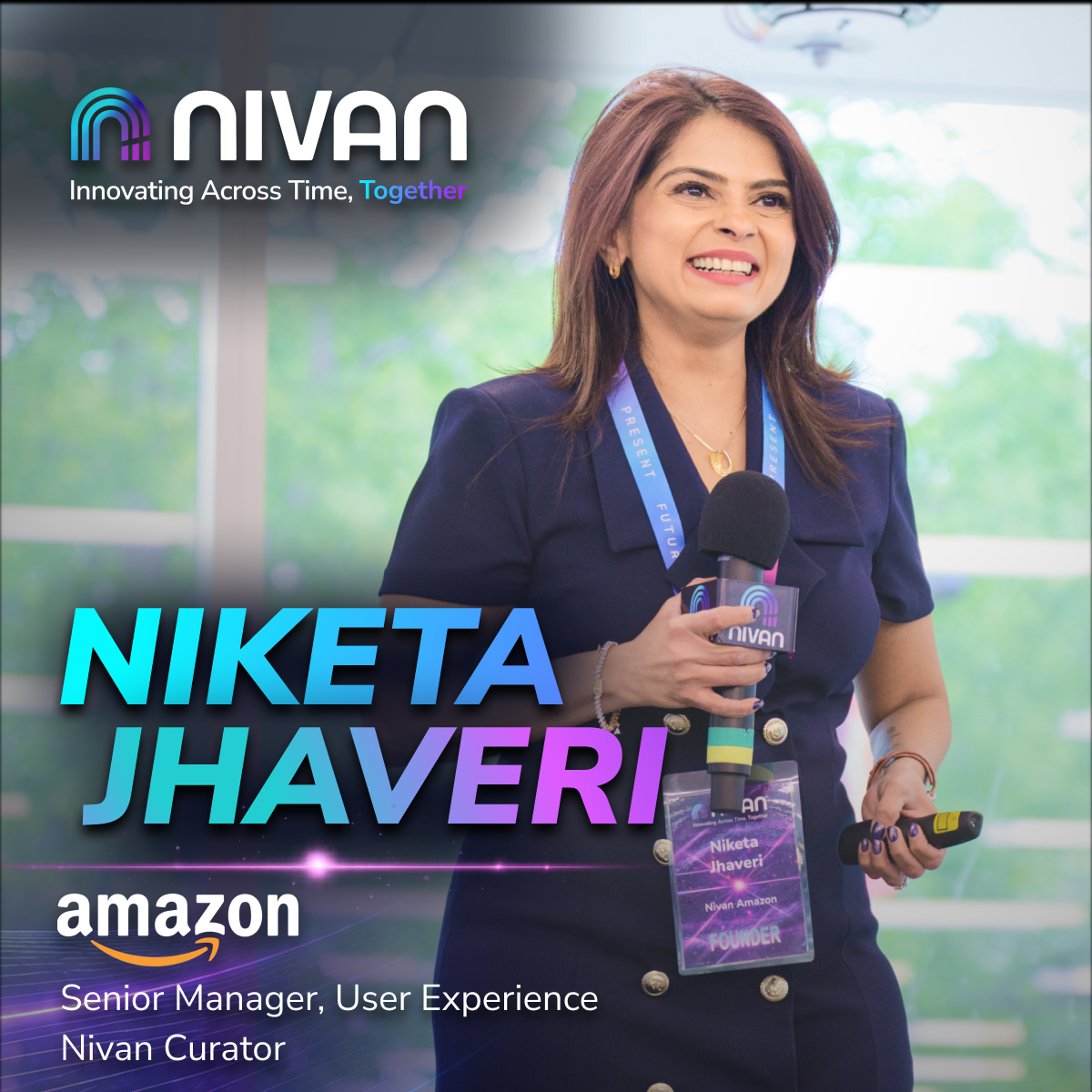
Niketa Jhaveri at Nivan 2026
Set it down for a few hours
The first instruction of the day was not about AI. It was to look around, take a breath, and set down whatever had been carried into the building. That framing was deliberate. A room that cannot put down its own urgency cannot think clearly, and clarity was the entire premise of what followed.
Why clarity is the scarce resource
We are working through the largest shift most practitioners have experienced. The tools, the timelines and the assumptions about how things get built are all moving faster than anyone can absorb, and that is precisely when clear thinking matters and is hardest to find. Nivan exists for people who want to think clearly while everything else moves.
What is wrong with the conference circuit
The critique was specific rather than general. Conversations about innovation have become fast and shallow, and most gatherings look only at what is next and what happens next year. That produces a permanent forward lean with no memory. Nivan was built differently, bringing past, present and future into a single room, on the premise that innovation is not only about the future but about what we carry with us when we arrive there.
The name is an argument
Nivan derives from Sanskrit and was not chosen casually. Ni stands for intention, for reflective clarity, the pause before answering. Van stands for dialogue, momentum and evolution, the conversation that moves things forward. The name describes what happens when reflection meets motion, which is also a fair description of the tagline, innovating across time, together. That final word carries the weight, because nobody has ever built the future alone.
Invisible decisions
The reason the room mattered that day is that decisions made inside design rooms, research teams and boardrooms will quietly shape the next decade of society. Many are invisible: decisions inside algorithms, recommender systems and assistants that determine who is seen, who is ignored, and what counts as true. Innovation without humanity becomes dangerous, scale without ethics becomes destructive, and speed without reflection loses us our place. The question underneath every session was how to move forward without losing what makes us human.
The three portals
The day was structured as three doorways. The morning travelled into the past not for nostalgia but for wisdom, asking the people who built the foundations what they worked out that we have not. Midday sat in the strange and sometimes terrifying present, where the shape of work, of trust, and of what users want and tolerate is changing, not to solve it but to see it clearly. The afternoon stepped into the future, not the future of slides but the one attendees would take to their teams the following week.
Chicago, and why the room was built here
This part was personal. Chicago is full of founders, researchers and designers doing thoughtful work, and for years the recurring thought after leaving those rooms was why everyone was not in one room more often. So one was built. Nivan is a way of giving back to a community that has given a great deal, and its first anchor is deliberately local.
Walk in anyway
The most quoted moment of the day came from a story about a father. Niketa did not learn English until she was thirteen and was underestimated in every room she entered. He believed in her before anyone else, and taught a daughter in Mumbai how to walk into a room that was not built for her. The instruction that followed was addressed to every woman in the audience wondering whether she belonged. Walk in anyway. Speak anyway. Build anyway, because that is how the next woman builds hers.
Where the best work happens
For everyone else in the room the framing was adjacent. Your best work does not happen inside certainty. It happens at the edge of possibility, when you take the risk of questioning the system, the assumptions and the limitations everyone else is quietly accepting. The future is not built by protecting what already exists, it is built by a willingness to see past it.
Fear, hype and the space between
Closing the day, the summary of everything heard was two conversations running in parallel. Fear of AI, mostly about work and obsolescence. Hype about AI, mostly about reach and speed. Both are real and neither tells the whole story, because innovation actually lives between them, and every speaker that day had traced the same three arches of past, present and future to get there.
Why a new manifesto was needed
The Bauhaus manifesto came out of one revolution. The Agile manifesto came out of a room of frustrated developers and redirected a generation of careers. A recent transformation manifesto for AI was published by a major consultancy and written for the boardroom. None of them addresses time. That gap is why the Nivan Manifesto exists, and why it was released as a living document for the room to edit and sign rather than as a finished statement.
The ten tenets
Curiosity over certainty, because the sharpest minds are not the ones with the most answers. Time as material over time as a metric, because past, present and future are what we build with rather than deadlines. Dialogue over monologue. Cross industry signal over single industry noise, because patterns arrive from the industries you are not in. Depth over virality. Human discernment over machine velocity, because AI moves fast and we decide where it goes. Community over audience, because twenty people who build with you matter more than twenty thousand likes. Original thought over polished consensus, because the half formed idea you actually believe is worth more than the finished one you do not. Designing with innovation over designing for innovation, because the human on the other side is the innovation. And legacy over launch, because the future remembers the work rather than the announcement.
