
From the New Bauhaus to Now: Why We Sat in That Building
Carlos Manalo is co chief executive of The Office of Experience and served as master of ceremonies for Nivan Live 2026. He opened the day by explaining the room itself, and closed it by arguing that the manifestos shaping our profession have always come out of turmoil, that the newest one was written for boardrooms, and that practitioners now need their own.
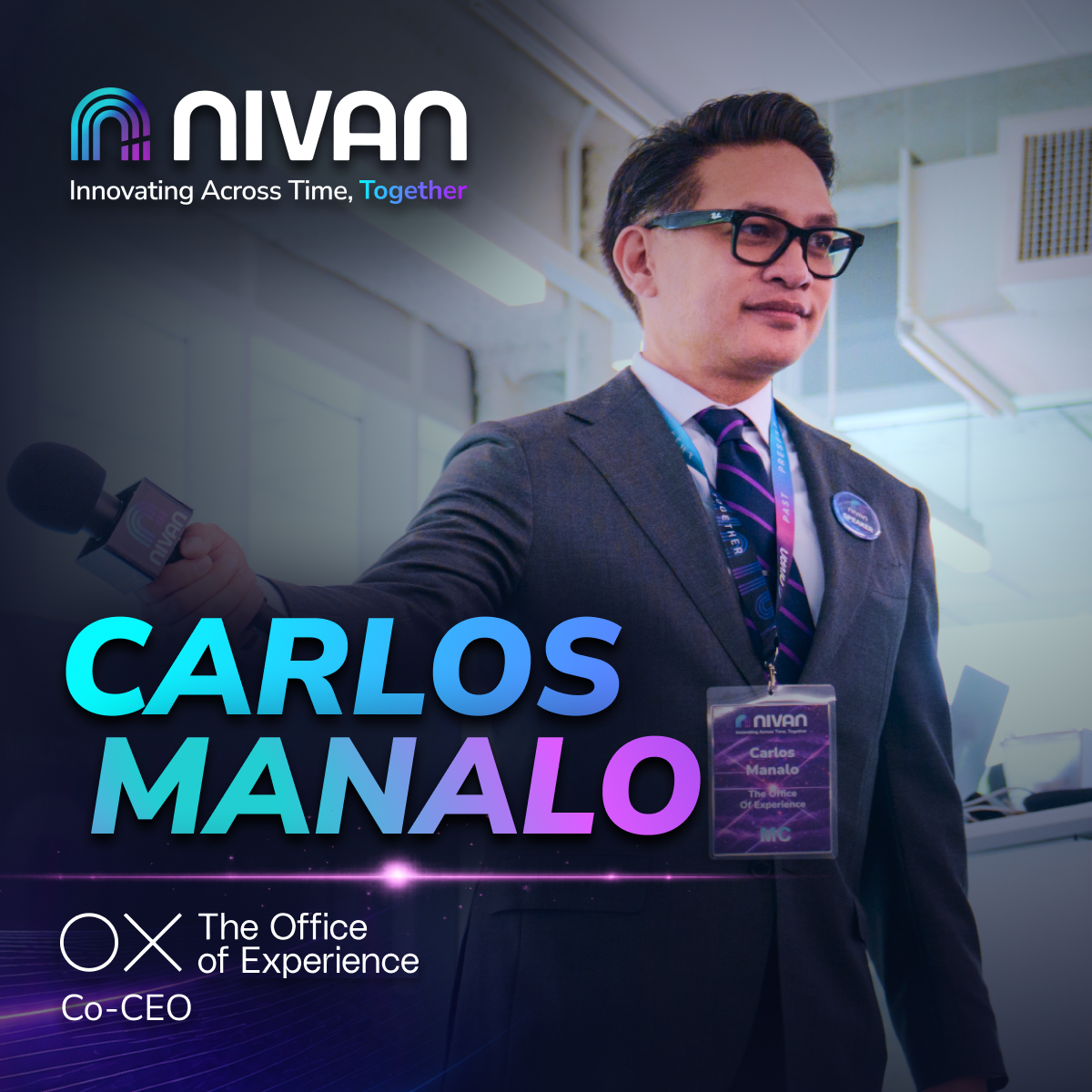
Carlos Manalo at Nivan 2026
Start by looking around
Carlos began not with an agenda but with an instruction to look at the hall and the school. The building traces to a professor who helped lead a German design school in the nineteen twenties, was forced to flee Europe, settled in Chicago and founded the New Bauhaus movement in 1937. His point was that reflection and inflection are not abstractions in that room, they are what the walls are made of.
Legacy as a working constraint
He asked the audience to carry that history through the day rather than admire it once. Generations of thinking about design and technology produced the space they were sitting in, and the legacy is being carried forward whether or not anyone acknowledges it. His stated hope was that by the end of the day it would become a pathway the room walks together rather than an inheritance it merely occupies.
Setting the architecture of the day
Carlos framed the structure in a sentence. Past, present and future, across nineteen speakers, eleven industries, in one room. He flagged that the Creative Duels would produce genuine dialogue and possibly conflict, and that sessions of reflection and inflection would alternate. Naming the shape in advance is what let the audience read each session as part of an argument rather than as a standalone talk.
What he heard in the corridors
By the closing session Carlos reported that the most valuable material had been the sidebar conversations. He was careful not to unpack the fears in public, and named their categories: jobs, the possible obsolescence of what practitioners do, and against that the hope of where this leads for the customers they serve. His conclusion was that the practitioners in the room sit at the centre of all three.
Fear and hype, and the space between
Together with the curator he summarised the day as two kinds of conversation. Fear of AI on one side and hype about AI on the other. Both real, and neither telling the whole story. He described the same person, in the same conversation, saying that AI makes them feel like a superhero and then asking whether they are engineering themselves out of a job. He had that conversation five times.
The Bauhaus manifesto
For the closing argument he returned to where he started. The Bauhaus manifesto emerged from a war and a revolution, and what it began is what we now call design thinking. Sitting in a building descended from that movement, he argued the room owes the conditions of its own practice to a document written in turmoil by people who did not know whether it would matter.
The Agile manifesto
His second example is within living memory for most of the audience. Somewhere between twelve and fifteen developers in Colorado in 2001 decided the existing way of working was no longer viable and wrote down what should replace it. Carlos asked for hands from anyone whose career was changed by that document, and got them. A small room and a short set of statements altered the trajectory of nearly everyone present.
The manifesto written six weeks ago
The present example was a transformation manifesto for AI published by a major consultancy shortly before the event, covered in the press and, he suggested, worth reading. It codifies much of what the day had discussed. His objection was not to its content. It was built for the boardroom, and it was not built for practitioners in a room like that one.
Where a stand becomes necessary
That is the hinge of his argument. If the documents defining how this era gets built are written for executives, the people who actually design and research and ship the systems are working to someone else's terms. Carlos traced his own path from new media specialist and information architect to user experience lead to running an agency building with AI, and used it to make the point that the practitioner category is not fixed and has never been passive.
Not a show, a responsibility
During the closing he interrupted the modesty of the moment to reframe what the audience was being asked to do. Signing the tenets was not an exercise and not a guest book. It was co creation, and it was a responsibility to look after each other, their customers and their businesses so that everyone in the room has a chance to scale, grow and practise their craft.
Designed by committee, with AIs in the committee
His best addition to the tenets came at number eight, on original thought over polished consensus. Everyone has been in rooms where design happens by committee. Now there are AIs in the committee. That makes the tenet considerably more urgent than it sounds, because without deliberate protection for original thought the organisation simply reflects its own biases back at itself, amplified by whatever tools its people are using.
Why he keeps refusing the innovation title
On the tenet about designing with innovation rather than for it, Carlos explained that he has been asked to be a chief innovation officer many times and has always declined. His reasoning is that the moment someone walks into a boardroom with that title, the biases in the room are aimed at them rather than at the customer. He would rather go where the customer is, which is a fair summary of the position he held all day.
